ASFA Hose Clip by Mikalor: 7 Critical Quality Control Points
Do you know what "false torque" is and how to avoid it? Discover the 7 quality control points (QCP) that guarantee the operational reliability of the ASFA hose clamp under extreme fatigue and pressure conditions. Learn how to optimize your assembly processes, prevent seizing, and ensure total sealing with the Mikalor standard.
The operational efficiency of a hose clamp in industrial applications depends on mechanical factors that go far beyond its external appearance.
At Mikalor, the manufacturing of the ASFA hose clamp is governed by Critical Control Points (CCP) that ensure the assembly's performance under fatigue and pressure. Below, we analyze the primary factors that determine its technical reliability.
1. Validation of Application Range and Supply Diameter
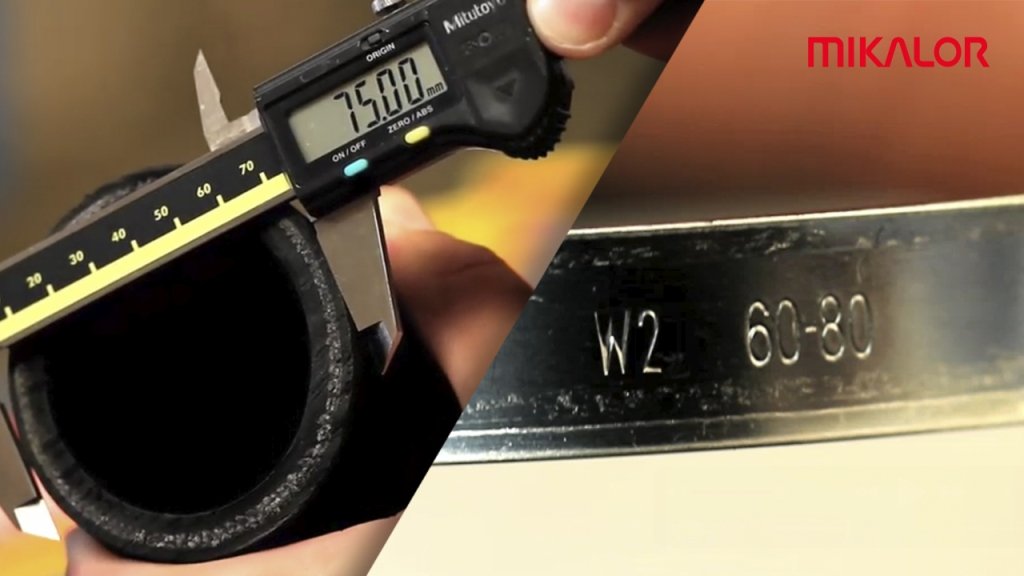
The first quality control of an industrial hose clamp focuses on the dimensional precision of its opening.
Most industrial assembly issues stem from parts that do not meet the specified maximum diameter, a common practice used to reduce steel consumption in the band.
The ASFA hose clamp guarantees the opening of the full diameter declared in its technical data sheet. This control is vital for two reasons:
Assembly Efficiency: It allows the hose clamp to be positioned loosely over the pipe without initial resistance, optimizing time on assembly lines.
Initial Engagement Safety: By ensuring the exact length of the band, we guarantee that even at its maximum opening, the screw maintains a sufficient number of threads engaged in the gearing, preventing tensile failure.
2. Optimization of Housing Geometry
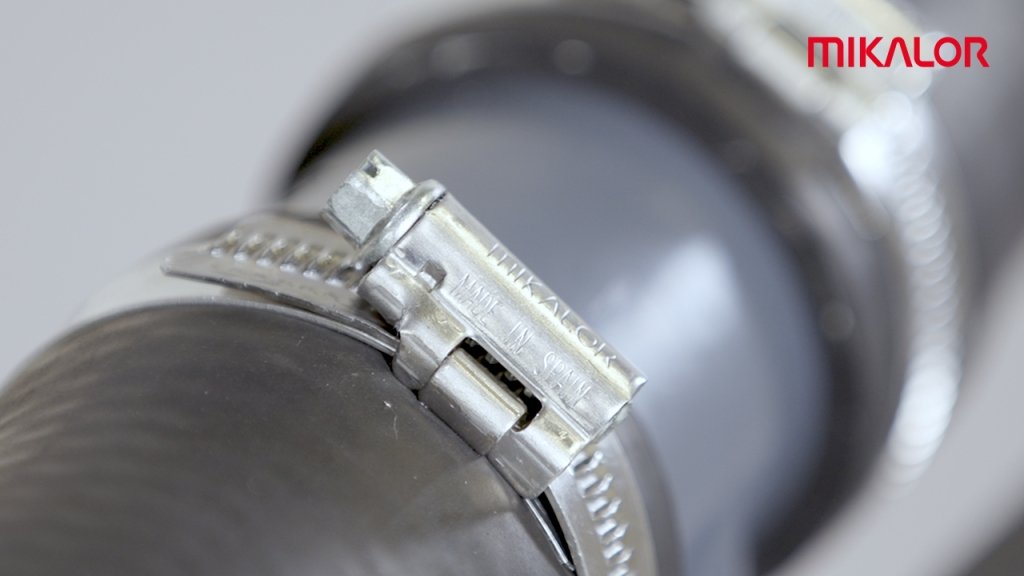
The clamp housing is not merely a support for the screw; it is the component that manages energy transfer to the band. The contact surface between the screw and the base of the housing is a critical point of the hose clamp, which is why Mikalor places special emphasis on it.
A larger contact surface allows for homogeneous distribution under high torque values. This is essential for reducing wear on the closure system during tightening cycles.
In installations where the worm-drive hose clamp must be readjusted or reused, this geometric robustness prevents deformation of the housing, maintaining constant torque performance over time.
3. Synchronization in Component Assembly
Unlike low-quality models, a professional hose clamp is an assembly of three elements (band, screw, and housing) that must integrate with minimal tolerances. The assembly process for the ASFA range is automated in a single workstation to ensure the precise fit of the set.
This control guarantees:
Axial Alignment: The screw remains perfectly parallel to the band, avoiding lateral shifts that could compromise the hose or pipe being clamped.
Mechanical Performance: By minimizing play between the three components, the applied force is distributed equally, exerting uniform pressure across the application radius.
4. Stabilization via Band Retention Radius
The integrity of a hose clamp during the tightening process depends on its ability to keep components aligned under tension. The band retention radius is the critical control that prevents the band from shifting or detaching from the housing when maximum working torques are applied.
This design is fundamental for hose clamps installed in environments with mechanical vibrations. If the retention radius is not exact, the components may suffer misalignment, leading to a loss of performance.
By securing this dimension in ASFA manufacturing, we guarantee that the pipe or thermoplastic hose receives constant pressure, eliminating any possibility of leakage due to structural misalignment.
5. Verification of Gearing and Helical Thread Pitch
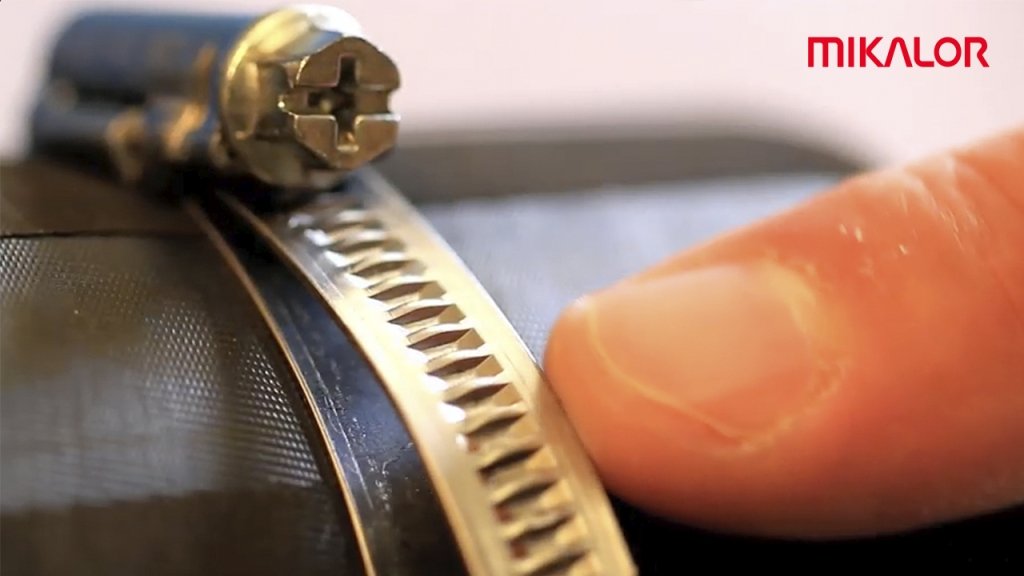
The effectiveness of a medium-pressure hose clamp lies in the engagement between the screw and the band threading. Consequently, a non-negotiable control point in Mikalor production is the inspection of the gear height and geometry.
Defective gearing prevents the screw from sliding smoothly, creating false torque. In these cases, the operator believes they have reached the tightening pressure necessary to seal the application; however, the resistance encountered comes from the internal friction of the mechanism rather than the compression of the hose.
This phenomenon is critical for safety: there is a risk of considering an assembly finished when, in reality, it has not reached the required sealing pressure.
Under these premises, the technical rigor of the ASFA range eliminates this uncertainty, ensuring that every Newton-meter applied is fully converted into effective and predictable radial force.
6. Tightening Speed Control and Seizing Prevention
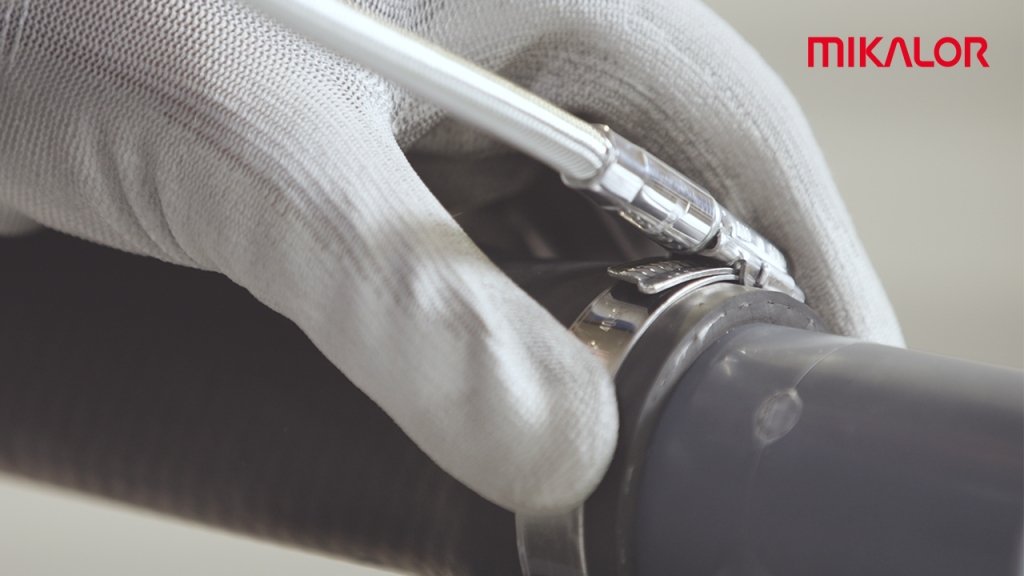
In automated production lines, efficiency is measured in seconds; however, excessive speed can be counterproductive. For this reason, screw-driving control is vital to prevent friction micro-welding, a phenomenon especially critical in stainless steel variants.
When installing a hose clamp at high RPMs, the heat generated by friction between the screw and the band can superficially melt the material, irreversibly locking the mechanism (seizing) before the hose is sealed.
To avoid these failures, the ASFA hose clamp mechanism has been designed to withstand high production rates, ensuring the thread design can manage those loads without the risk of mechanical seizing or premature screw breakage.
7. Optimization of Friction Torque in Pre-assembly
The final critical control point is friction torque (also called free-running torque), which measures the internal resistance of the part before it enters a loaded state. A low friction torque is the hallmark of a well-manufactured and properly lubricated hose clamp.
Conversely, excessive greasing can result in inaccurate applied torque readings.
For installers, this translates into better ergonomics during manual tightening and total precision in assemblies using automatic tools.
On the contrary, a clamp with excessive friction can "deceive" the sensors of electronic screwdrivers, causing line stoppages or, worse, insufficient sealing. In the ASFA range, this control ensures that handling smoothness is consistent across every batch, regardless of the application diameter.
The technical superiority and versatility of the Mikalor ASFA hose clamp are not the result of chance, but of strict control over these 7 critical points.
By choosing a clamp designed under these criteria, industries ensure not only fluid tightness but also the optimization of their assembly processes and the long-term durability of their installations.
Do not leave your productivity to chance. Consult our technical team to learn how Mikalor’s CCPs can reduce your failure costs, or access our PRIVATE AREA directly to manage your orders and check the immediate availability of the ASFA range.
Coming Soon: In the second part of this series, we will analyze the performance tests of an ASFA clamp and how they affect effectiveness in different scenarios.
See you in the next article!